The ultimate small yacht tender
or fun motor or sailing dinghy
Unpoppable, Unstoppable
Indestructible, unsinkable, self-bailing and FUN!
Basic Boat only $2850, ready to row!
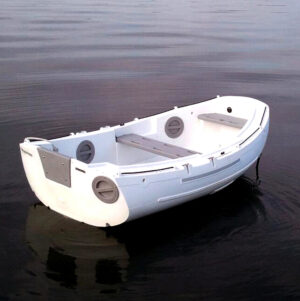
Meet the Portland Pudgy: the rugged little boat that does it all.
Row it. Motor it. Sail it. Depend on it.
Unsinkable, stable, and incredibly versatile—this is not your average dinghy.
Whether you’re exploring the harbor, cruising offshore, planning ahead for safety, or teaching your grandkids how to sail, the Pudgy is ready.
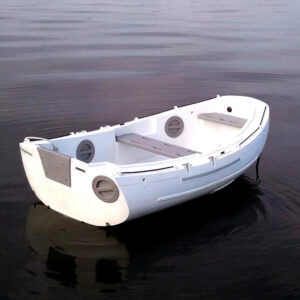
You’re free to have fun on the water when you, your family, and your crew are safe. Portland Pudgy, Inc has re-imagined the dinghy in the context of safety at sea, and come up with something really new. A rugged, unsinkable dinghy you can row, motor, sail, and even use as a lifeboat. The Portland Pudgy safety dinghy makes boating even more fun, by making it safer.
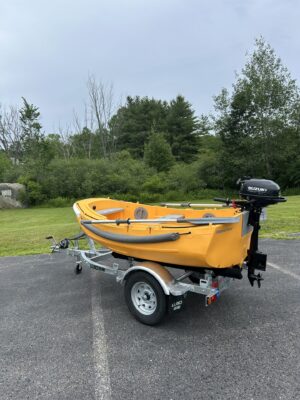
The Portland Pudgy safety dinghy is the ideal yacht tender to row, motor, and tow. Unlike inflatable boats, the Portland Pudgy is a joy to row. It tracks perfectly and moves along nicely with a small motor. The stable, unsinkable Pudgy is extremely buoyant and has huge carrying capacity…
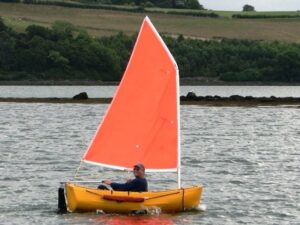
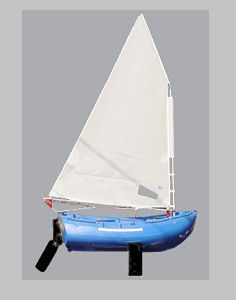
The sail kit makes your Portland Pudgy a fun, safe sailing dinghy. The stability and buoyancy designed into the Portland Pudgy make it safe and sea-friendly as a recreational sailing dinghy for the whole family. The Pudgy takes surprisingly rugged seas and wind for a boat its size…
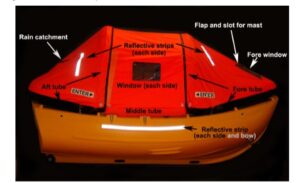
The Portland Pudgy is a rugged, unsinkable self-rescue boat, even without the inflatable exposure canopy and other survival gear. With the canopy and sail, the Portland Pudgy is a dynamic lifeboat. Unlike inflatable life rafts, the Pudgy can’t deflate, and you can sail, row, or motor to safety…
Fill out the form below and we will contact you.

“The Portland Pudgy came along as an idea a number of years ago, when I first read about it in one of the boat magazines, though at that time you still couldn’t get one. It’s been on my mind ever since, and then last year in Belfast a couple of folks were rowing by in one and stopped to talk, on the way back out to their sailboat… The Pudgy looked even better in person than it had in all the literature and articles, and the occupants were very happy with it.
This boat is specially designed as a rowing and sailing dinghy at the same time as being able to be converted into a lifeboat, out at sea. A tremendous amount of thoughtful detail has gone into all of its various aspects – it is sturdy, and surprisingly stable; it rows well, is self bailing when unloaded, and it has a sailing rig. Made of roto-molded polyethylene, the same stuff used for plastic kayaks, it’s tough enough to be bumped around and not care.
Self-bailing counts for a lot – left at the float in the rain, the boat will not be half sunk when you come back three days later. Bailing after every rain is a task I have been particularly opposed to adding to our boat fun. If you were to tow it, there would also be no worries about filling with water in the waves.”
Sailing AUKLET ~ Small sailboat cruising and related thoughts
“I am amazed how well it sails and how fast it is. We even set up the lifeboat inflatable canopy and sailed it that way. It definitely is the way to go.
I use it every day and so am familiar with it. Contrary to a life raft that I never use until my boat is sinking in the dark in a driving rain and huge seas (where’s the sense in that?!?!).
It doesn’t need to be re-checked each year to the tune of $600-$700 (eventually it will pay for itself in saved yearly fees)
It is rigid. It will not break-up in heavy seas and I can even hook myself in to the very rigid lifting eyes if I needed to. I am making a “Y” tether for my sailing harness especially for the pudgy.
After the storm, I can sail or row back to safety. Why sit around until I die of thirst, or worse yet drift slowly and helplessly just out of reach of land. DUH!
It holds a ton of stuff…water, radio, flares, mast sail, boom, oars, sea anchor, anchor, bailing pump. etc. etc. etc. and that stuff is with me always.
It is a very stable, strong, rigid, everyday dinghy. I can literally stand on the gunwale!
It carries a lot of weight easily (How do they get to do that anyway?)
It looks cool.
Something for sailors that actually does what it says it will.”
Captain Allen Murphy
“If you are an inveterate gunkholer but your boat draws 3 feet or more you may be missing a big part of cruising solitude. A Portland Pudgy gives you a chance to discover your own spots on the water….The recipe is simple.
Put your copy of Proust or James Joyce in the Pudgy’s water tight locker.
Go to some cut-rate sports store such as Academy or WalMart and buy a patio umbrella for about ten bucks.
Find an isolated cove and anchor the “big” boat.
Put the Pudgy overboard. Decide how far you want to wander. If it’s close, row there. Further away select from 1. A trolling motor. 2. An outboard 3. Sailing, depending on the wind…
Anchor, or tie the Pudgy to a branch.
Mount the umbrella in the mast step and open the shade.
Stretch out by removing the center seat (of course you have PFD cushions and or a vest), and read the stuff you always wanted to but didn’t have the environment.
Cool beverages may help. Sun block and DEET are prudent. A hand-held vhf allows communication with the larger boat and allows one to hurl epithets at stink-potters who make a wake too close to a small anchored boat. And behold, the rebirth of your soul!”
Cecil F., Little Rock, AR
“A year ago we bought a second hand Pudgy. In the last couple of weeks we have got around to sailing it. The two of us can stretch out in reasonable comfort and, whilst it is not the speediest dinghy I’ve ever sailed, it is a delight. Stable enough yet it’ll still pick up speed with a small gust. Even better from our viewpoint is that Toots [the cat] has taken to it and will readily come aboard to be ferried ashore for a roam around. We haven’t, as yet, persuaded her that she should try the sailing rig.
Are they expensive? On the face of it yes. BUT it does not require periodic inspection, at huge expense, for an item (your life-raft) you hope never to use….. You know when you dump it over the side to escape your home that it will work because you’ve been using it regularly to row ashore or pleasure sail around the anchorage which represents genuine value for money. Anyway, it’s our choice on the matter and we’re very pleased.”
Micky and Bee
“Towing characteristics are important, because even if you have dingy davits you still end up towing your dingy. Our first three dingy’s were awful for towing. We had an eight foot inflatable dingy that was essentially like towing a suction cup, and if the wind was over 15kts it would flip over… We also had a Walker Bay that towed like a little eggshell with no drag, but would also flip over at the first gust of wind… The Portland Pudgy is none of these things. It tows with minimal drag…much less than our plywood or our inflatable dingy. It doesn’t ship water when you tow it, and if it did, it is a self bailing boat when it is empty…This single thing makes the Pudgy 1/10 the chore of owning compared to any other dingy we have had.”
Rolland T., MI
207.742.7614
Contact Us
How does the Pudgy compare to inflatable boats and to other hard dinghies in terms of stability?
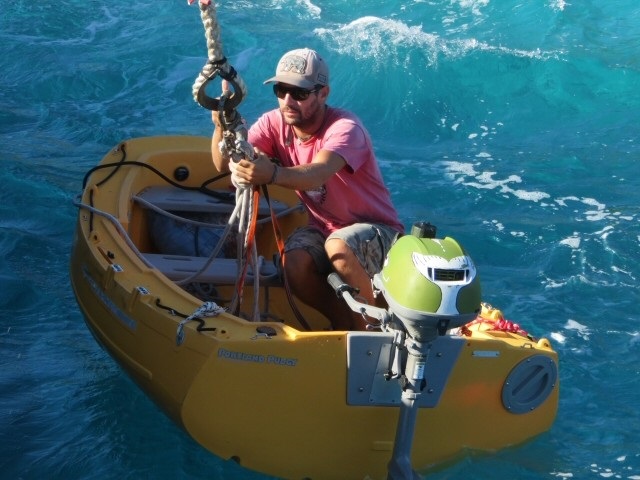 With the Pudgy, as with any hard dinghy, you need to step into the cockpit more or less centered. In any hard dinghy you need to be mindful of where you put your weight. You don’t board the Pudgy by stepping on the gunwale the way you can step on an inflatable’s tube. With an inflatable, the initial stability is greater when you first board it, in comparison to hard dinghies. However, in rough seas or wind, an inflatable can flip from either wind or wave action, trapping occupants underneath, and it’s impossible to right. The Pudgy, as a lifeboat, is designed for stability in rough seas (hence the soft chine).
The Pudgy is also much more stable than not only inflatables, but also other hard dinghies once you are in the cockpit and when towing.
“It is incredibly stable. We wouldn’t use any other. In the sailing we do a dingy can mean the difference between life or death, and this isn’t in reference to the lifeboat abilities of the pudgy just its stability and durability.” Rolland T., MI
“I spent about 500 miles towing my Pudgy. Never flipped over and towed very well.” James V., FL

The Pudgy is made of rugged high quality, compounded, high density polyethylene, which is intrinsically buoyant, and the space under the floor is filled with closed-cell foam. (See Technical Information.)
The European Union’s consumer protection agency did a drop test of the Portland Pudgy, in which they filled the dinghy’s cockpit with one thousand pounds of rock, and dropped into the water from eight feet! The Pudgy just bounced up, didn’t ship water at all, and had plenty of freeboard. No harm done! You couldn’t do that with standard dinghies or inflatable boats.
“Takes a lot of abuse. A very strong, forgiving dinghy. I have met a lot of people who are tired of the air leaks [in their inflatable boats] and did like the Pudgy. It will last me a very long time.” James V., FL
“It is a real workboat built for real world conditions.” Rolland T., MI
Here are some of the ways the Pudgy safety dinghy beats RIBs, inflatable boats, and dinghies with RID kits:
Unlike inflatable boats and RIBs, the Portland Pudgy cannot deflate and is unsinkable, with a double hull of rugged polyethylene and floor filled with closed cell foam. You can drag the Pudgy over rocks and coral without tearing a hole and sinking your boat.
Unlike inflatable boats and RIBs, it does not need to inflate and cannot deflate.
Unlike inflatable boats, it is extremely durable and weather resistant.
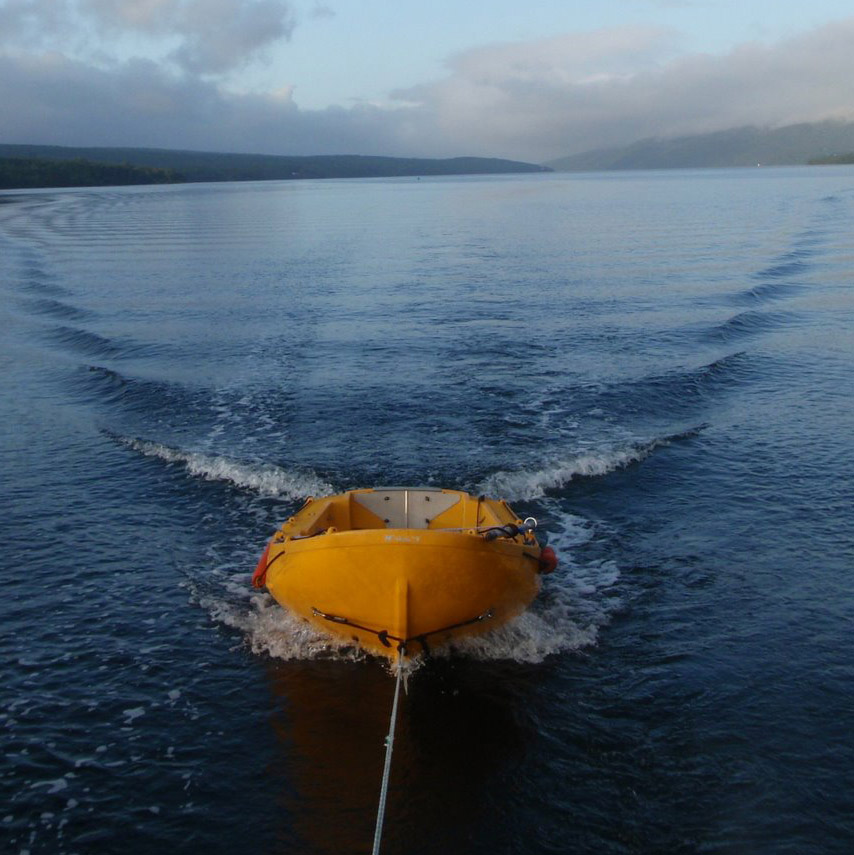 The Pudgy rows beautifully and has two rowing positions (with an adjustable middle seat and two sets of oarlock sockets). You can’t really row an inflatable boat.
Unlike inflatable boats or most standard dinghies, it’s a fun sailing dinghy.
Unlike inflatable boats or most standard dinghies, the Pudgy is self-draining when empty or carrying less than 35 pounds.
Unlike inflatable boats or most standard dinghies, it has lots of dry, interior storage space.
It is lighter than most inflatable boats and RIBs.
Unlike inflatable boats, it’s aesthetically pleasing.
Why buy Portland Pudgy safety dinghy instead of standard dinghy or a dinghy with an RID kit?
Here are a few of the things that make the Pudgy superior to standard dinghies and dinghies with RID tube kits:
Can I adjust my rowing position on the Portland Pudgy dinghy?
 The Portland Pudgy has two sets of oarlocks and an adjustable middle seat (for two rowing positions). You just flip the middle seat forward or back, and use the appropriate set of oarlocks. No other dinghy we know of has this important feature.
“My wife and I are very pleased with the Pudgy. With the center seat that flips forward to shift my weight, we can row with my wife in the aft seat without the transom deep in the water, and the boat trimmed nicely.” Rob L., RI
Unlike inflatable boats, the Portland Pudgy safety dinghy rows beautifully. Inflatable boats are almost impossible to row.
How buoyant is the Portland Pudgy safety dinghy? Is it as buoyant as inflatable boats?
The Portland Pudgy safety dinghy was tested by the US Coast Guard at 557 lb of buoyancy (see photo at left). Carrying this load, there’s still over ten inches of freeboard. In the USCG test it took an incredible 1855 pounds of weight to submerge (not sink) the dinghy. See Technical Information for more info.
Inflatable boats and RID kits can deflate. Is the Portland Pudgy unsinkable?
Yes, unlike inflatable boats, standard dinghies, or dinghies with RID kits, the Pudgy is unsinkable. It is made of high density, compounded polyethylene, which is inherently buoyant, and the area under the floor is filled with closed cell foam. The water-tight storage compartments inside the double hull add buoyancy.
In a test, with the hatches deliberately opened and the interior and cockpit flooded, the Pudgy still remained afloat, although submerged to the gunwales. Using the optional pump, we bailed out the interior chambers, and the boat rose up out of the water. We then bailed out the cockpit. (See Technical Information.)
How many people can the Pudgy carry?
 The Portland Pudgy safety dinghy is US Coast Guard-approved as follows:
● With no motor: 4 persons or 557 lb (persons and gear)
● With a 2 HP motor: 4 persons or 557 lb (motor, persons and gear.
(Note that even overloaded as in photo above, probably carrying over 700 pounds with five people and a motor, there’s still over ten inches of freeboard.)
“We continue to have great fun with the Pudgy.” Bob and Sheila K., Butte, MT
What size motor can the Portland Pudgy take?
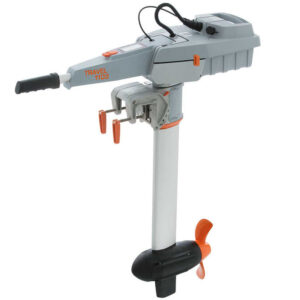
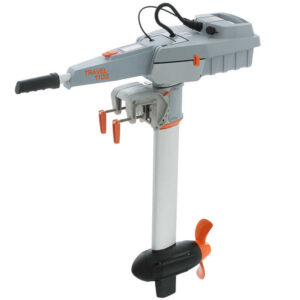
 The USCG regulates the motor size on recreational boats, based on length. At 7′ 8″, the USCG specifies a 3 HP motor. Heeding USCG regulations, Honda’s air-cooled 2.3 HP long shaft is an excellent choice for the Portland Pudgy. The Torqeedo 1003L electric motor is also excellent. Watch this Torqeedo video (you’ll have to scroll down the page a bit).
Because of its high freeboard, the Pudgy needs a long shaft motor.
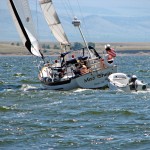 The Portland Pudgy safety dinghy tows beautifully, incomparably better than inflatable boats or standard dinghies. Because of its buoyancy, stability, and long skeg, the Pudgy tows with minimal drag and tracks perfectly. The triangulated bridle and the placement of the two stainless steel tow eyes add to the perfect balance.
This video gives you an idea:
Video: Towing Portland Pudgy, Glacier Bay
“I know a little bit about how a Portland Pudgy tows because over the last six months I have pulled the Pudgy about 3100 Nautical Miles. Towing characteristics are important, because even if you have dingy davits you still end up towing your dingy. The Portland Pudgy…tows with minimal drag…much less than our plywood or our inflatable boats. It doesn’t ship water when you tow it, and if it did, it is a self bailing boat when it is empty.” Rolland T., MI
Anyone who has towed an inflatable knows that the Pudgy’s performance when towed sets it apart from inflatable boats. For detailed information on towing the Portland Pudgy, carrying it on davits, deck, cabin roof, etc., see Dinghy Towing and Carrying.
What about carrying the Pudgy yacht tender/lifeboat on deck or on davits?
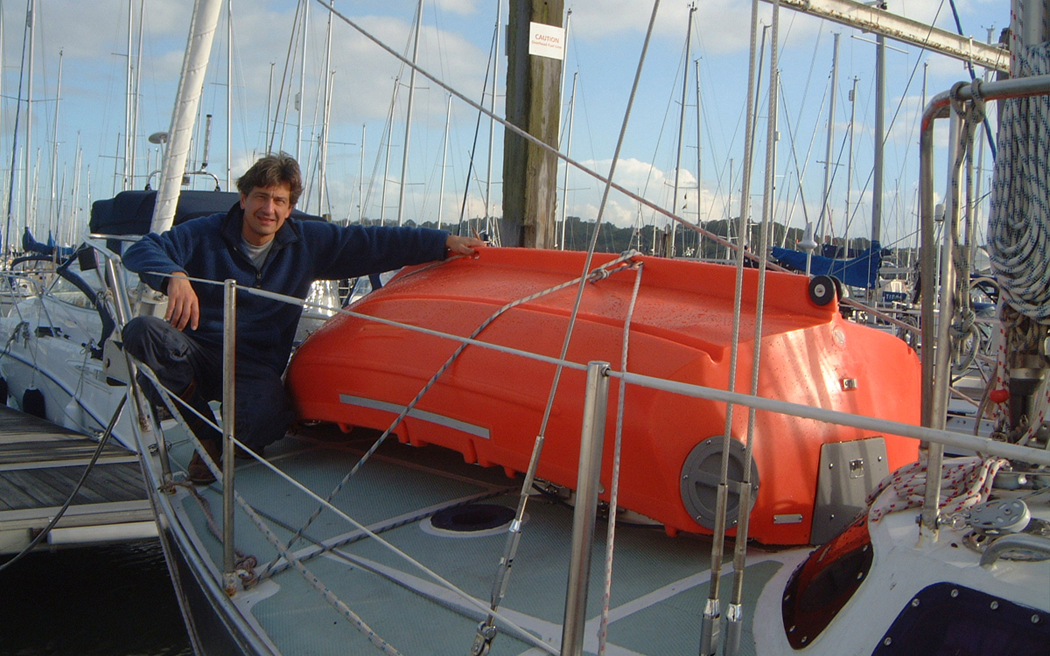 On Deck or Cabin Roof: The Pudgy’s pram shape allows the boat to fit on the deck or roof of many cruising boats. Pass strong webbing through the though-holes in the walls of the boat for fastening the boat to strong through-bolts on the deck.
On Arm Davits: Portland Pudgy offers lifting eyes for lifting the Pudgy up into a davit harness. The davit harness then supports the weight of the boat.
On Swim Platform Davits: Weaver Industries designed a davit system for the Portland Pudgy, that makes use of the through-holes built into the boat.
See Dinghy Towing and Carrying for more information.
What if Pudgy yacht tender capsizes?
“I haven’t yet found the winds where capsize seems possible!” Bill K., Sausalito, CA
It’s difficult to capsize the Pudgy, but if you do, it’s very easy to right it, using the handholds in the bottom of the boat. (Note that inflatable boats, if capsized, are almost impossible to right from the water.)

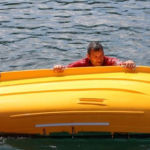
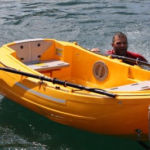
Above, Pudgy owner Jason Thistle rolls the Pudgy over. “Rollover testing…worked great. Tough to roll over…easy to roll back. Cheers, JT.”
It comes up empty of water because of the thick side walls. This can be life-saving, since hypothermia is a leading cause of fatalities in boating accidents. It’s very easy to climb back in, using the hand-holds in the middle seat.
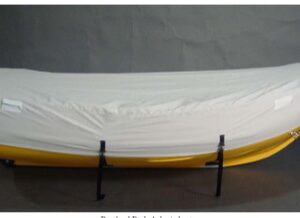
When used as a lifeboat, with the inflated exposure canopy in place, the canopy adds 400-plus pounds of buoyancy. The empty lifeboat is self-righting. With two adults inside, the Pudgy lies partially on its side; the passengers can right the boat by shifting their weight or waiting for wave action to right it. (See Lifeboat FAQ.)
Is Pudgy self-draining? How much maintenance does it require?
The Pudgy is low maintenance. It’s self-bailing when carrying around 25 pounds or less (a real pleasure after a heavy rain). You can tow the Portland Pudgy with the drain plug open, and it stays dry inside.
“When you pull the drain plug, instead of filling up and sinking it drains out completely empty. This single thing makes the Pudgy 1/10 the chore of owning compared to any other dingy we have had. ” Rolland T., MI
It’s easy to clean inside and out. The gutters in the floor run to the drain, so it’s easy to wash out the cockpit with a good rinse.
The UV treated polyethylene protects against sun damage. Unlike inflatable boats, it is not prone to deteriorate in sunlight.
How roomy is the Portland Pudgy?
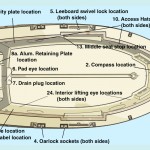
Because of its beamy pram shape, the Portland Pudgy safety dinghy has as much cockpit area as many 9- or 10-foot dinghies and inflatable boats, but takes up less room on deck.
The Portland Pudgy safety dinghy’s roomy cockpit is 16.1 square feet. In addition, there is loads of additional storage room in the interior compartments in the side walls of the boat.
“I have found that my SR19 could use some more room for stuff when going boat camping. My solution is to put extra stuff in our Portland Pudgy and tow it behind the Arima.” Fred F., NY.
The interior hull storage space is accessible through five covered hatches. There’s so much interior space that you can stow the entire sail kit inside, as well the oars, provisions, exposure canopy, and other equipment. This storage space is extremely important if you plan to use the Portland Pudgy safety dinghy as a dynamic lifeboat.
Even if you’re just using the storage space for picnic provisions or fishing gear, it’s nice to have such secure storage space. In most standard dinghies and inflatable boats, your gear and supplies are in the open cockpit.
Is Portland Pudgy safety dinghy a good family boat?
 “I enjoy sailing the Pudgy around the marina and the kids love to row and fish from it. Whenever we are using it a crowd gathers and I am bombarded with questions. The old salts ask about its stability, weight and design and most everyone asks ‘where can we get one’… We love our Portland Pudgy and highly recommend it to anyone.” Mike S., CA.
Unlike inflatable boats, the Portland Pudgy is incredibly versatile, so you can use it as a fun sailboat, a rowboat, and a motor boat. The Pudgy’s stability and ease of handling make it the best dinghy for blue water sailors or for kids, a good work deck, and a good platform for diving or fishing. Although designed as a self-rescue dinghy/tender and dynamic lifeboat for blue water sailors, it’s easy and fun to sail, and rows and motors well. The safety designed in for blue water sailors also makes it the best boat for kids on the market, whether for just “messing around” or learning to sail.
“My grand children can row the Pudgy very well since the seat heights are in the correct relationship with the oar and oarlocks which is critical for a starter. We had a hard time getting them out of the Pudgy when it was time for them to go home!” George H., Bustard’s Island, ME. (He ended up buying a second Pudgy, so he wouldn’t have to share with his grandchildren!)
To learn more about the optional accessories, including, sail kit, lifeboat accessories, electrical system, rod holders, and more, click here.
Why would I want a Portland Pudgy safety dinghy instead of an inflatable life raft?
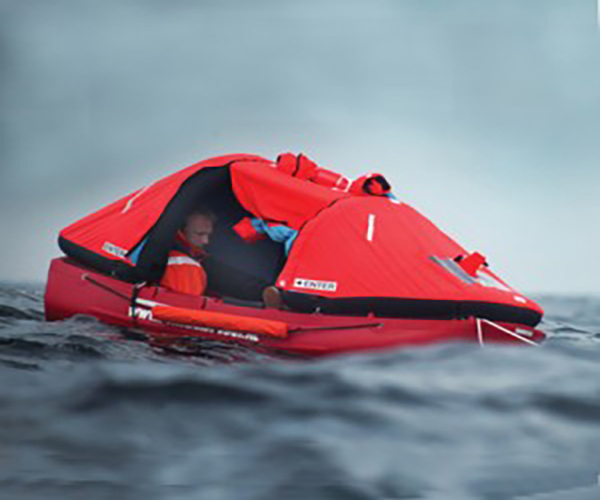 The Portland Pudgy is unsinkable, and its exposure canopy and other survival gear make it a dynamic life boat you can sail to safety. For detailed information about the Portland Pudgy dynamic lifeboat system, go to Lifeboat FAQ.
“It’s tough, functional, and practical, and if the choice came down to climbing into a traditional life raft or boarding the Pudgy, I know where I’d rather be.” Portland Pudgy, a Tender That Can Save Your Life, by Peter Nielsen, Editor in Chief. Sail Magazine, September 2010.
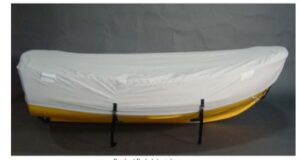
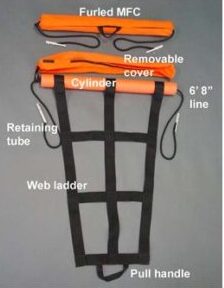
The Portland Pudgy dynamic lifeboat is a self-contained unit and integrates with sophisticated safety and survival equipment (including exposure canopy, sea anchor, and sailing kit). All of the equipment fits inside the double hull of the boat or under the rear seat. We also offer an electrical system, bailing pump, boat covers, and more (see Portland Pudgy Lifeboat Components for more information). The mast telescopes down and the sail furls around it, and they are stored through the rear access hatch. The exposure canopy and sea anchor also fold up and fit through an interior hatch. The leeboards and the rudder stow neatly under the rear seat. (You can also store oars, ditch bags, food, water, and other equipment in the storage compartments.)
In addition, unlike an inflatable raft, which you must have tested and repacked periodically (and must trust the competence and reliability of the testers), you can test the Portland Pudgy exposure canopy yourself.
Is the Portland Pudgy safety dinghy good for hunting and fishing?
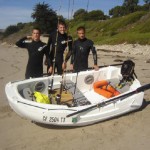 “We couldn’t be more pleased with the handling, stability and ‘fish-ability’ of our new boat.” Jim L., Huntington Beach, CA
“The best damn bass boat in Arkansas.” Cecil F., Little Rock, AR
“It is a real workboat built for real world conditions.” Rolland T., MI
 For info on the Portland Pudgy’s uses as a sports fishing boat, duck hunting boat, and workboat (rowboat or motorboat).
For detailed information on the optional accessories available, see Price List.
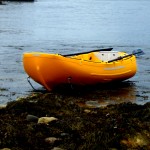
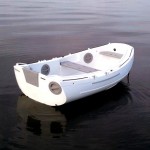
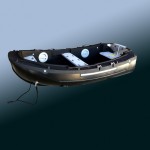
The Portland Pudgy yacht tender and safety dinghy is available in warm white, sunset yellow, and black.
You won’t need bottom paint if every couple of weeks or so you use a rag or wash cloth to wipe off the bottom of the boat. The slimy stuff wipes right off.
If the growth has progressed past a coating of slime, it’s very easy to clean the bottom of the Pudgy with a rough sponge or dish brush, along with some dish soap if necessary. For barnacles and other more stubborn growth, use a plastic window scraper or a plastic putty knife. Don’t use metal blades, metal scouring pads, or powdered cleansers, as they may cut or abrade the surface.
Power washers are also excellent.
Some Pudgy owners have reported using a relatively new bottom paint for inflatable boats that’s sold at most marine stores. The one brand we know of is Pettit, though there may be others. The paint must stick to plastic type materials that have a flexible surface.
To prepare the Pudgy for bottom paint, lightly sand with 220 grit, neatly at and below the water line. Then wipe thoroughly with LACQUER thinner (not paint thinner). Bear in mind that paints do not stick very well to polyethylene, but you should have some success.
One Pudgy owner reported good results with a marine wax used on racing sailboats. If you do use wax and later decide to use bottom paint you will need to clean ALL the wax off.
Portland Pudgy is a rugged unsinkable safety dinghy you can row, motor, sail, and even use as a lifeboat. It is the ideal yacht tender to tow or stow.